Quick Answer
To keep your sunroom warm through fall, pair high-density 3-inch foam walls with Low-E argon glass, insulate the floor with an engineered Therma-Deck panel, and lean on commercial-grade thermal breaks that slow heat loss. Add a modest heat source and a few daily habits, and the room stays comfortable from cool mornings to frosty nights.
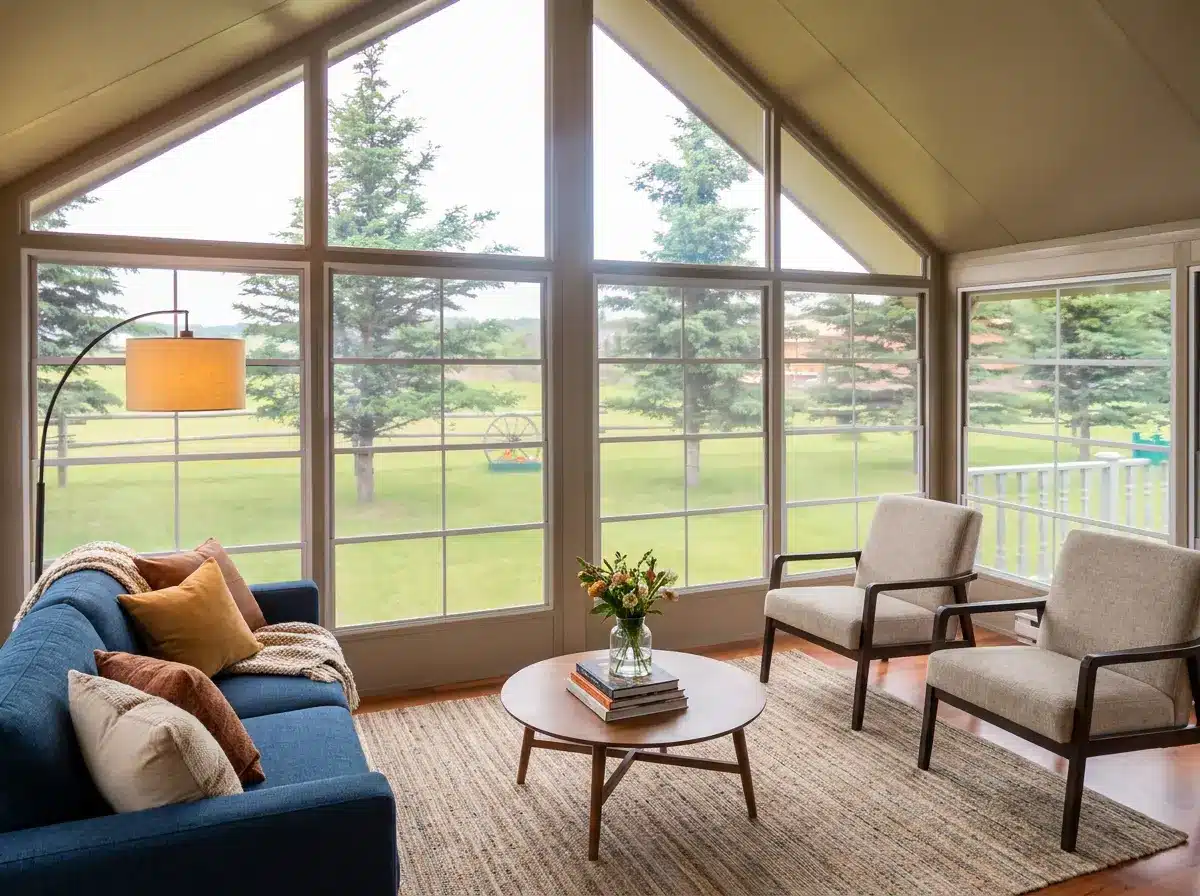
There’s something about a North Dakota autumn: the prairie light turns golden, the air sharpens, and the evenings cool fast. Knowing how to keep insulated sunroom warm in fall lets you enjoy every bit of it without reaching for a parka. At Sunspace 3 Season Solutions, we’ve spent over 30 years helping homeowners across Fargo and the surrounding communities turn chilly shoulder-season evenings into warm, comfortable ones. This guide walks you through the practical steps, walls, glass, floor, and habits, that separate a space you abandon when the cold moves in from one you reach for all season.
Why Autumn Comfort Starts With the Right Room
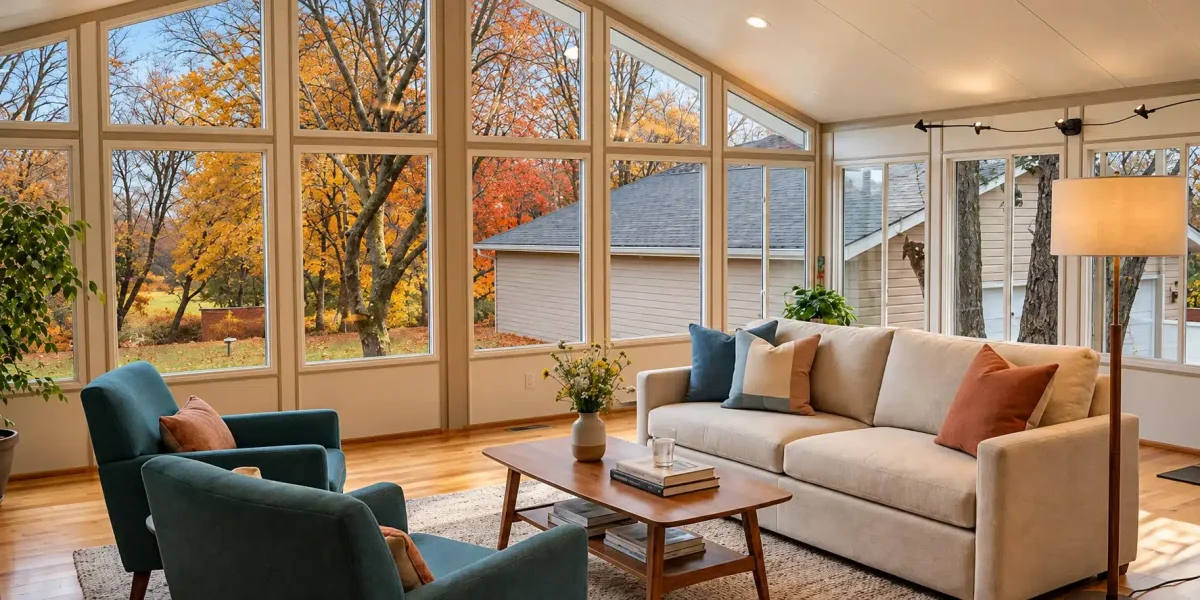
An uninsulated porch is lovely in summer and nearly useless once the temperature drops. The whole point of an insulated build is that the comfort doesn’t quit when the leaves do. You get to watch the prairie colors shift and the geese move through, coffee in hand, while the wind works at the windows outside.
Here’s the honest nuance: not every room is built for this. A 3-season vinyl sunroom is wonderful for stretching your summer, but it isn’t engineered to hold heat through a hard freeze. An insulated room is a different animal, with full walls, better glass, and a real floor underfoot.
Step 1: Build on Foam Wall Insulation for Sunrooms
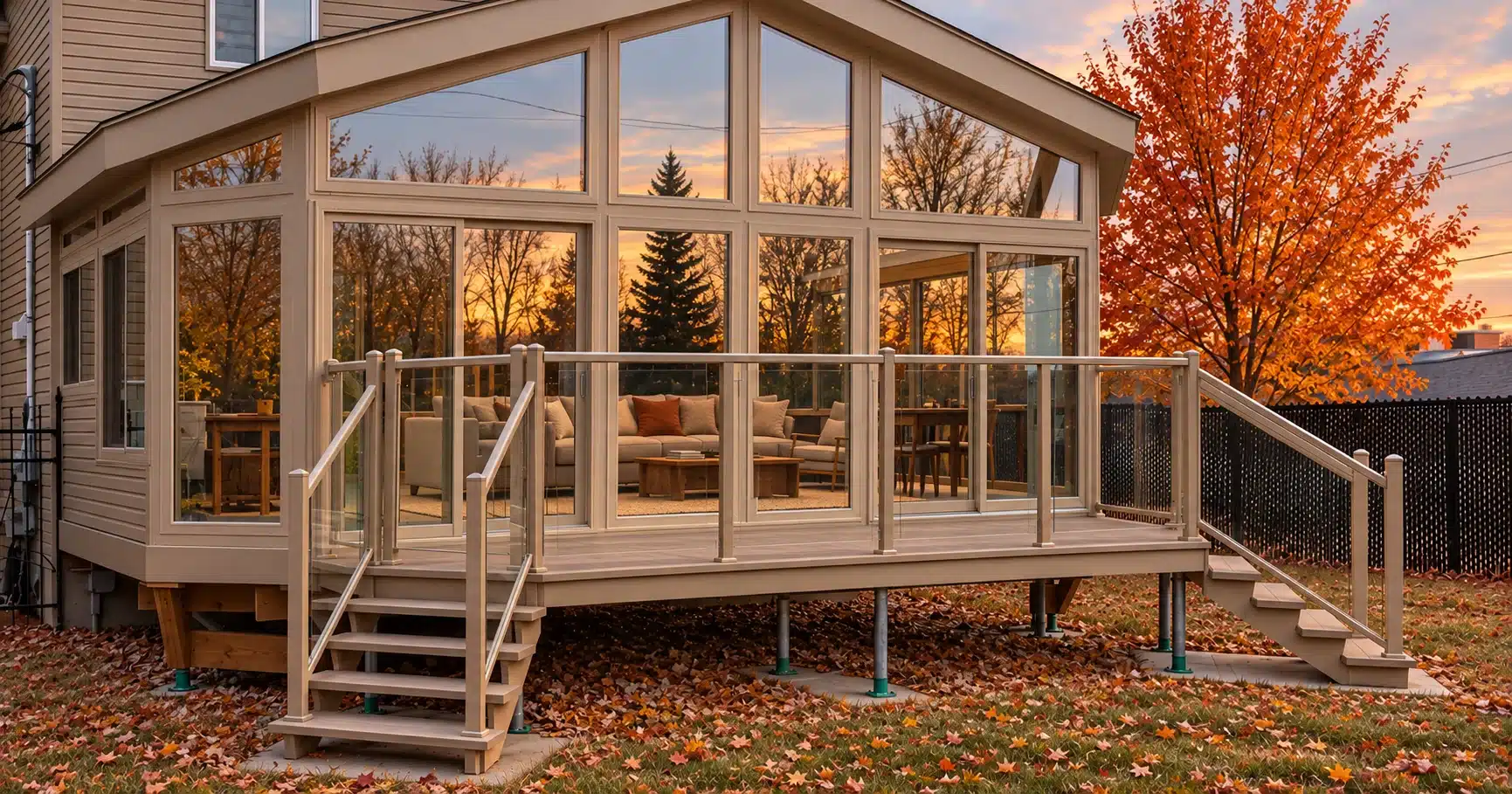
Warmth starts in the walls. Our insulated sunroom uses high-density 3-inch foam walls, and that thickness matters. It works like a good winter jacket, trapping heat inside instead of letting it bleed out into the cold. The foam is doing the quiet work here.
Good foam wall insulation for sunrooms also keeps the room steadier and quieter: fewer drafts, less temperature swing from one hour to the next. Behind that foam, heavy-gauge 3-inch aluminum extrusions carry the wind and snow load that a prairie winter is happy to throw around.
Step 2: Let Low-E Argon Glass Do the Heavy Lifting
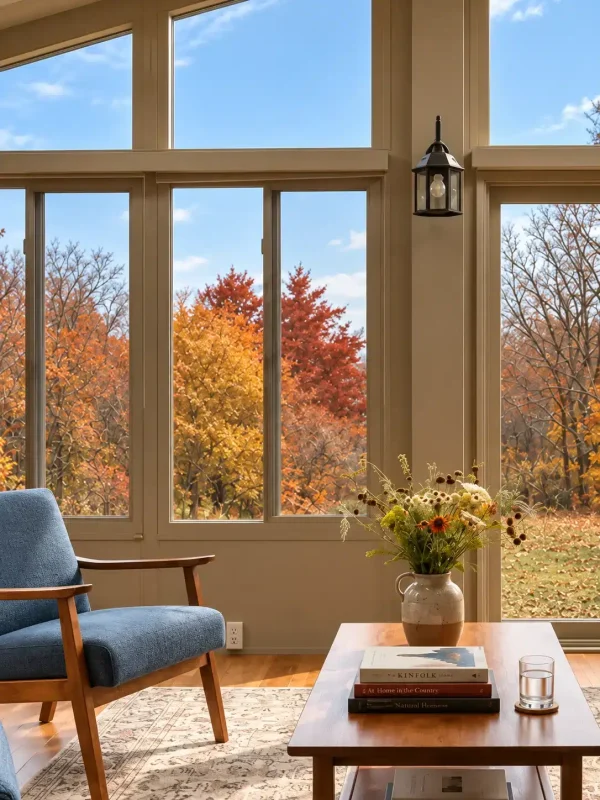
Glass is where most rooms lose their heat, so this is where Low-E argon glass for warmth earns its keep. Every window is high-efficiency glass filled with Low-E argon gas, a layer that reflects your warmth back inside while still letting the autumn light pour in. You can read more about the glazing from the official manufacturer.
Just as important, all the aluminum extrusions carry commercial-grade thermal breaks. In plain terms, that’s a barrier that stops cold from traveling straight through the metal, which reduces condensation and heat loss on frosty mornings.
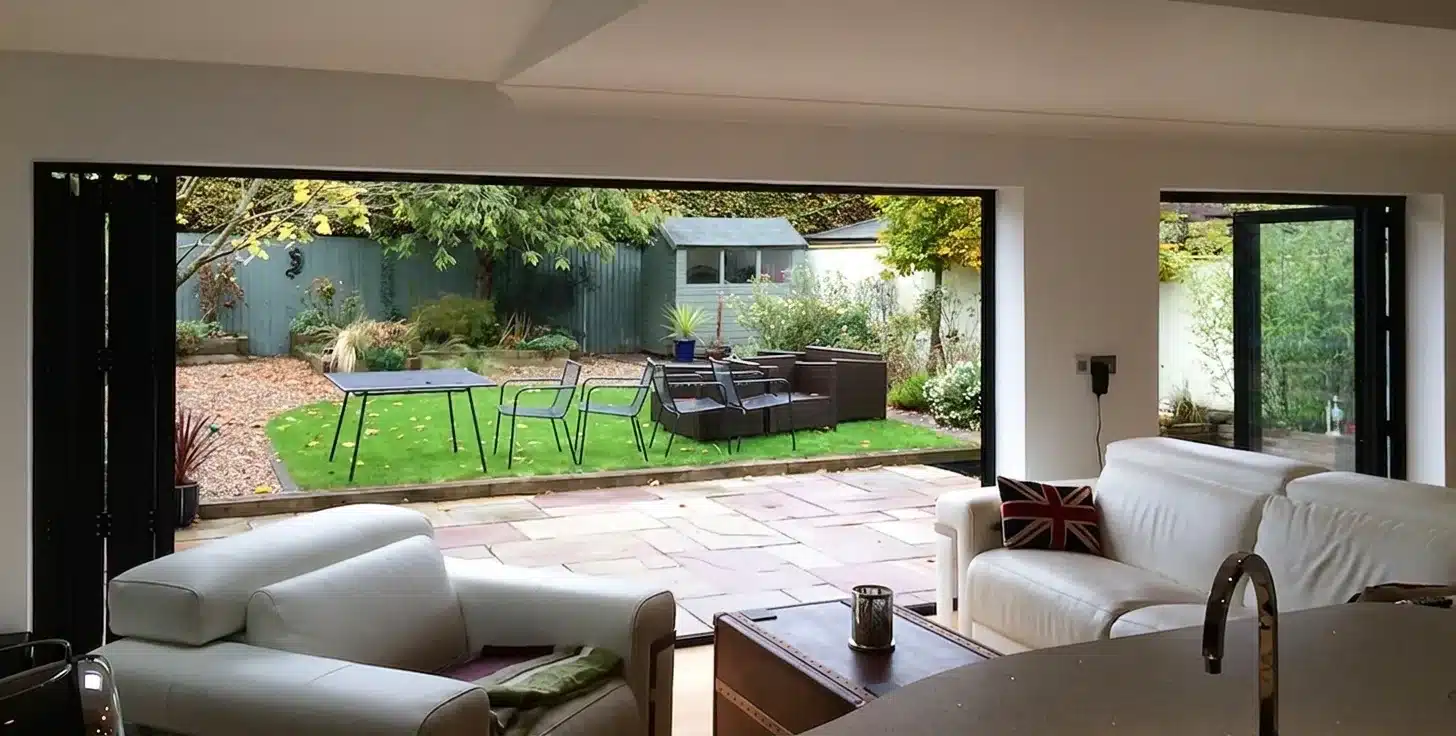
On milder afternoons, you’ll still want to open things up and feel the breeze. Our WeatherMaster windows let you slide panels wide and bring the outside in, then seal tight again when the sun drops and the chill returns.
Step 3: Insulate the Floor With Therma-Deck
Cold floors ruin cozy rooms. That’s why we build on a Therma-Deck pre-manufactured floor deck: engineered oriented strand board sandwiching an insulating core, so the chill from the ground never reaches your socks. It comes in three thicknesses, 4-1/2-inch R19, 6-1/2-inch R28, and 8-1/4-inch R35.
The thicker the panel, the more insulation you get underfoot, and the later into the season the space stays comfortable. Better still, each deck arrives ready for your finished flooring, carpet, tile, laminate, or hardwood, and eliminates costly framing and extra installation labor along the way.
Step 4: Keep Insulated Sunroom Warm in Fall With Smart Daily Habits
Great construction gives you a head start; smart habits carry it home. Because the room is fully insulated for year-round comfort, a modest heat source, a wall unit, a plug-in heater, or a mini-split, holds temperature easily once the structure is doing its part.
A few simple routines help, too. Open blinds on sunny afternoons to bank free solar heat, then close them as the light fades. Run a ceiling fan on low to push warm air back down. On the coldest nights, nudge the thermostat up before the frost settles rather than after you’re already shivering.
Common Mistakes to Avoid
The biggest one? Expecting a summer-only porch to perform in the deep cold. Screen rooms and vinyl rooms have their season, and asking them to hold heat through a hard freeze only leads to disappointment.
Another common slip is skimping on the floor. Beautiful walls and weak flooring still leave you with cold feet, so match your Therma-Deck thickness to how late in the season you actually want to use the room.
Finally, gaps. Even the best glass underperforms when trim and seals are rushed. That’s exactly why the team at Sunspace 3 Season Solutions treats expert installation as seriously as the parts themselves.
FAQ
Is an insulated sunroom really usable through a North Dakota winter?
An insulated room is fully insulated for year-round comfort, so with a dedicated heat source many homeowners use it straight through winter. That said, how warm it stays depends on your heating setup and how hard the season gets. During a consultation we’ll walk through realistic expectations for your specific home near Fargo.
What makes Low-E argon glass better for fall?
Low-E argon glass for warmth uses a reflective coating plus argon gas sealed between the panes. The coating bounces your heat back inside, and the gas slows heat transfer, so the room stays comfortable as the evenings cool. You still get full daylight and clear views of the changing prairie colors.
How thick should the foam walls and floor be?
Our rooms use 3-inch high-density foam walls, and the Therma-Deck floor comes in R19, R28, and R35 options. The right floor depends on how far into the cold season you plan to use the space. We’ll recommend a combination that fits your goals and your budget during a free quote.
Can I convert my existing porch instead of building new?
Often, yes. A porch conversion can reuse your existing footprint while upgrading the walls, glass, and flooring to an insulated standard. Every home is different, and pricing varies, so the best next step is a no-pressure consultation where we can see what your structure allows.
Conclusion
A comfortable autumn room isn’t luck. It’s the right walls, the right glass, an insulated floor, and a few smart habits all working together.
Get those pieces right and you can enjoy a cozy insulated sunroom all autumn without a second thought, watching the prairie light fade while the cold stays outside where it belongs.
At Sunspace 3 Season Solutions, we’ve helped homeowners across North Dakota do exactly that for over 30 years. Reach out for a and let’s design the room you’ll actually want to spend your evenings in.